Describe How Plants Can Be Grown Using Asexual Reproduction
The new plant is genetically identical to the parent plant from which the stock has been taken. Asexual reproduction refers to the formation of a new organism from a single parent with no involvement of gametes or sex cells.
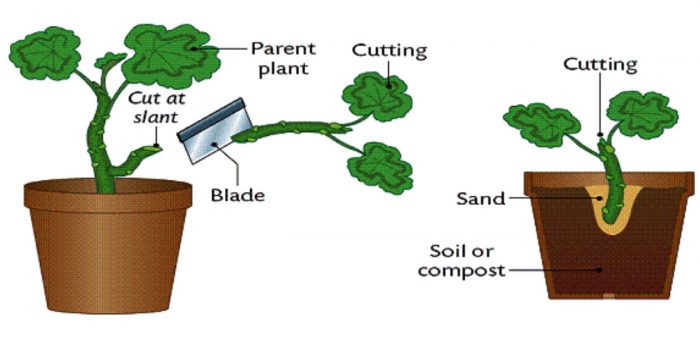
Asexual Reproduction In Plants Class 7 Reproduction In Plants Science
Vegetative asexual reproduction involves a plant creating new plant material that goes on to become a new plant.
. The two unite to form a new plant containing the roots of one and the stem and leaf structure of the other. Reproduction is used correctly in the previous sentence. MODES OF REPRODUCTION USED BY SINGLE ORGANISMSAsexual reproduction-Fission-For unicellular organisms cell division or fission leads to the creation of new individuals.
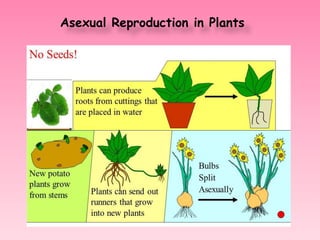
For example potato tubers runnersstolon onion bulbs etc all reproduce through vegetative propagation. The other type of asexual plant reproduction is called apomixis. Different types of stems allow for asexual reproduction.
Bulbs - underground food storage organs with fleshy leaves that store food and can grow and develop into new plants eg. Daffodil bulbs store energy underground. The tunicate bulb is used in daffodils for asexual propagation.
In natural asexual reproduction roots can give rise to new plants or plants can propagate using budding or cutting. Bulbs scally bulbs are used in lilies for asexual reproduction. Using tissue culture many plants can be grown from one parent in disease-free conditions.
This technique is commonly used for ornamental plants. Some organisms produce offsprings using mitosis. Look at the pictures on the right side and locate the name of each organism in the hidden word puzzle on the left.
Objective Describe the different types of asexual reproduction using illustration. Both new cells are genetically identical to original cell - containing same genetic information 2. Both corms and bulbs can self-propagate giving rise to new plants.
These buds are reproductive in nature and when they fall on the ground they germinate and form a new plant. Once the daffodil plant has died back the bulb develops side shoots that will grow into new daffodils for next year. What is asexual reproduction.
Reproduction with another parent. Asexual reproduction in plants occurs through their vegetative parts such as leaves roots stem and buds. An advantage of asexual reproduction in plants is1 point reproduction without another parent.
In asexual reproduction part of the parent plant is used to generate a new plant. Potato plants grow tubers underground during the spring and summer. It is used to describe a process.
As the runner grows some parts will start to sprout and. Adventitious roots can give rise to new plants like in the case of ivy. This type of cell division is mitosis 3.
C Ginger forms masses of stems called rhizomes that can give rise to multiple. Roots will grow from the buried stem and the exposed tip will grow into a new shoot. A In Amoeba asexual reproduction occurs by fission binary and multipleIn Amoeba nucleus first divides into two daughter nuclei by mitosis and then body along with the cytoplasm constricts from the middle which gradually deepens and eventually divides into two individual.
Plants can also reproduce with runners where the original plant sends out a skinny stem that rests on the ground and keeps growing longer. Asexual reproduction can be advantageous andor disadvatageous. Secondly bypassing the sexual process can help a plant in times of dryness since motile sperm require water to fertilize the egg.
Reproduction in plants can be both asexual and sexual. This can be through budding tillering or other processes. Asexual reproduction involves one parent.
A form of asexual reproduction in plants Does not involve gametes flowers seeds or fruits Offspring are produced by a single plant genetically identical to parent Can happen naturally or it can be done artificially Natural Vegetative Propagation eg. Describe bees in asexual reproduction. An ordinary cell can make a new cell by dividing in 2.
Blank is a technique that growers use to encourage plant reproduction from plant stems. Vegetative propagation- Begonia and Bryophyllum are examples of vegetative propagation by leaves. This is called vegetative propagation.
The plantlets are then placed in the soil so that they can grow into mature plants. This is a replacement for sexual reproduction that uses seeds to create new plant life. Many plants reproduce asexually as well as sexually.
Spore formation is another means of asexual reproduction. Grafting layering and micropropagation are some methods used for artificial asexual reproduction. Many bacteria and protozoa simply split into two equal halves during cell division.
Activity 21 Loop A Word. This is a form of asexual reproduction in which new plants grow from the buds growing on the margin of the leaves. Give an example of a Plant from stems.
Another advantage lies in the fact that plants with the desired. Answered Jan 20 2018 by faiz 312k points selected Jan 20 2018 by Golu. In grafting part of a plant is attached to the root system of another plant.
Many different patterns of fission have been observed. Asexual Reproduction in Plants Definition. Genetic variation is beneficial because it1 point protects.
Runners - horizontal stems eg strawberry or spider plants. Asexual reproduction is used by many unicellular and multicellular organisms. Plants That Use Asexual Reproduction.
One positive aspect is that it can create individuals rapidly and in large quantities. Three methods of plant asexual reproduction are. This is known as asexual reproduction 4.
These tubers will grow into new plants the following spring if they are left undisturbed. Describe how plants can be grown using asexual. This new plant can be cut away and replanted.
Garlic gladiolus and crocuses Crocus use corm to reproduce asexually. Budding fragmentation vegetative propagation and spore formation take place in the process of Asexual Reproduction. A The corm of a garlic plant looks similar to b a tulip bulb but the corm is solid tissue while the bulb consists of layers of modified leaves that surround an underground stem.
Asexual Reproduction In Plants

Asexual Reproduction Biology Ii

What Is Grafting In Artificial Propagation Here Is More Grafting Vegetative Propagation Reproduction Plant Grafting Vegetative Reproduction Plant Science


Comments
Post a Comment